Cut, Rework, Reveal: Collage and Erasure in Poetry
On found text, collaboration, and chopping things up
I think I was first introduced to the cut-up technique — via Dada — by a friend and fellow student on my PGCE course at the Institute of Education in London in the early 2000s. The course was heavy on practical advice and contemporary analysis but light on theoretical foundations. Holly suggested a more radical and interesting approach that I hadn’t realised I’d been yearning for, and I went wandering off into the work of Paulo Freire, bell hooks, and others.
Since then, I’ve used various versions of cut-up and collage in my poetry teaching: to overcome initial fear of the blank page, to encourage collaboration and a sense of play, and to work on craft and technique — form, lineation, juxtaposition and more.
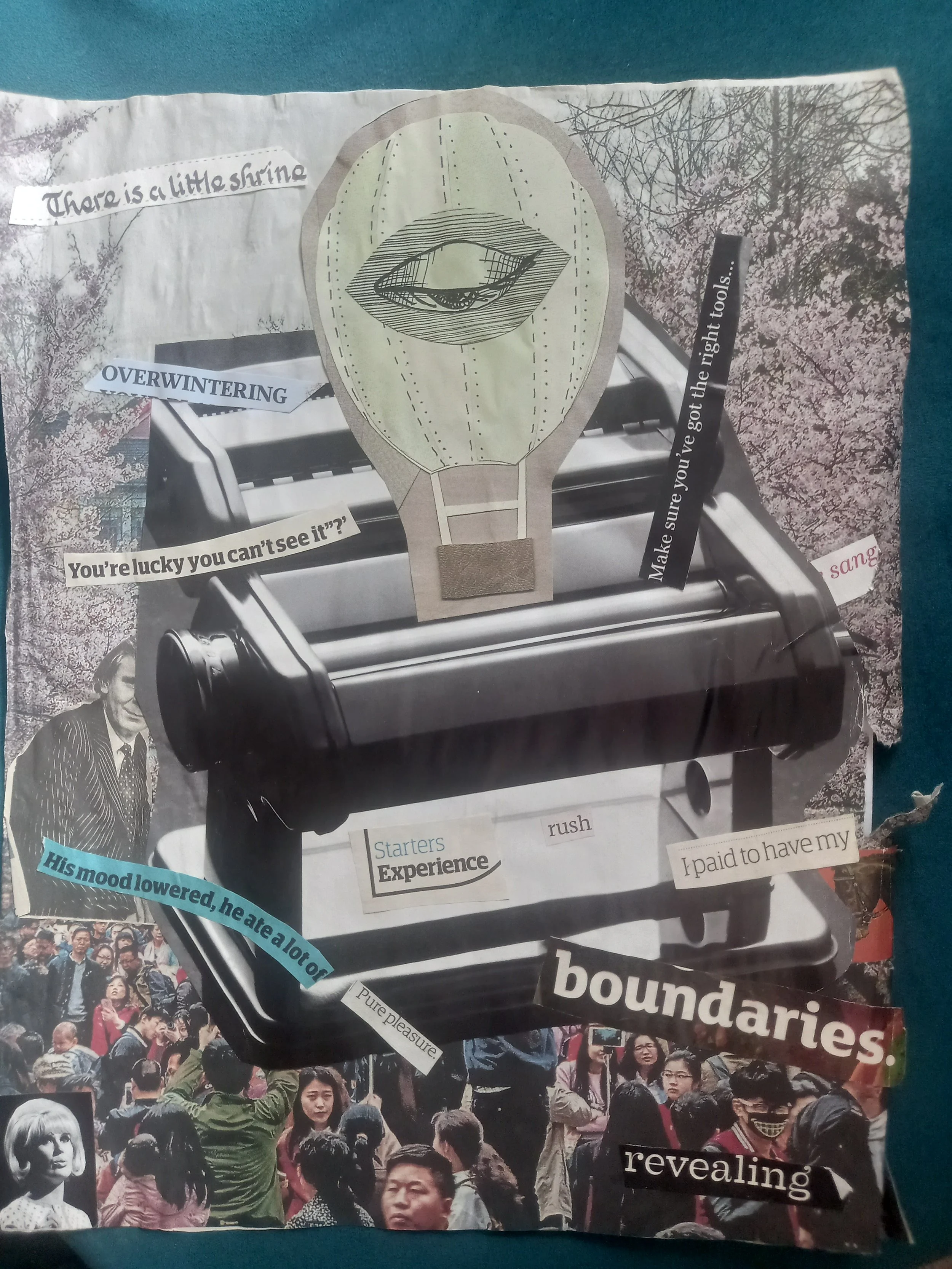
One of my collage experiments from a decade or so ago.
I love the way that using found text and images makes explicit our relationship to culture and tradition. We don’t create ex nihilo: we work with the material of our culture and experience, interpreting, rearranging, challenging and transforming what is already around us. This can be playful, and it can also be political: working with found material asks us to look again at the language and images we inherit, and at the assumptions and power structures embedded in them. I also love how, when used as part of a creative practice, found material can free us from some of the anxiety around ownership and territory, while, by an uncanny sleight of hand, often leading us back to the deeply personal.
